AI Smart Media Converter vs Traditional Media Converter Explained

AI Smart Managed Media Converter vs Traditional Media Converter

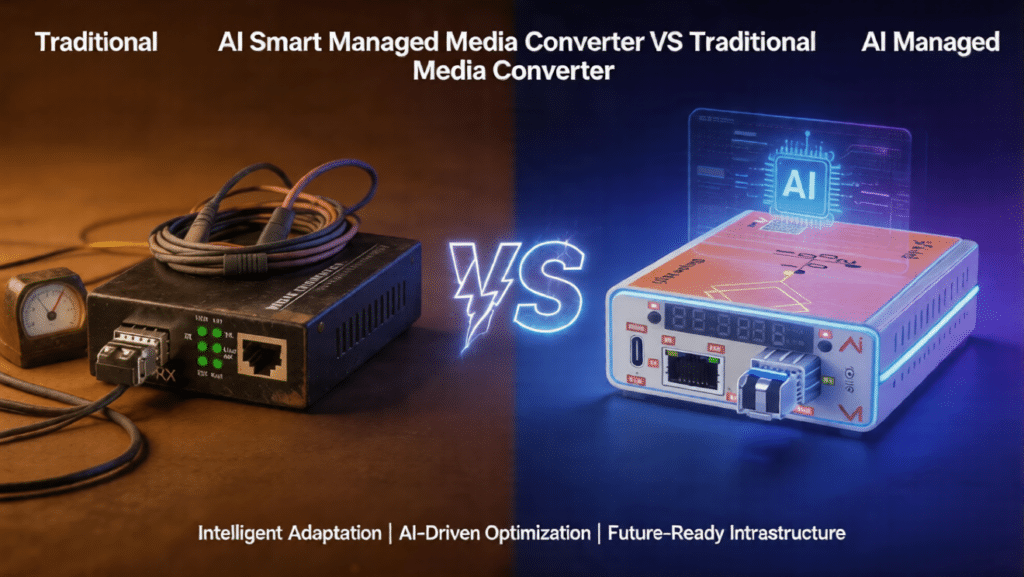
AI Smart Managed Media Converter vs traditional media converter comparison showing monitoring, PoE control and fiber diagnostics differences

Traditional Media Converter Is No Longer Enough


Most traditional fiber media converters only provide basic copper to fiber data transmission, without visibility, monitoring, or remote control.

As modern ethernet networks grow in scale and complexity, this creates operational challenges such as:

  • Difficult fault detection
  • High maintenance cost
  • No real-time fiber visibility
  • No remote troubleshooting capability

To solve these issues, E-link introduces the AI Smart Managed Media Converter series.

It is designed for smart network operation and remote management.

1. What is a Media Converter?


A media converter is a device that converts electrical Ethernet signals (copper Ethernet) into optical signals, and vice versa.

It is one of the most common types of media converter used in modern networks.

It is widely used in:

  • IP surveillance systems
  • Enterprise LAN networks
  • Telecom fiber access networks
  • Industrial Ethernet systems

Its main function is enabling long distance data transmission over fiber optical cables, especially in single mode fiber deployments.

Common types include:

  • Ethernet media converter
  • Gigabit media converter
  • Copper to fiber converter
  • Multi-gig media converter

However, traditional devices lack management and diagnostic capabilities.

2. Limitations of Traditional Media Converters


In real-world deployments, unmanaged ethernet media converters introduce operational constraints:

  • No real-time monitoring of fiber status
  • No optical power visibility (no DDM)
  • No remote configuration
  • No alarm system for failure detection
  • Manual maintenance required
  • High troubleshooting cost in large networks

These limitations become more critical in distributed environments such as:

  • Smart cities
  • Surveillance systems
  • Industrial IoT
  • Data center edge networks

3. What is an AI Smart Managed Media Converter?


The AI Smart Managed Media Converter upgrades traditional fiber media converters into intelligent network devices.

Unlike standard gigabit media converters, it gives full visibility into fiber and Ethernet data transmission. You can view this through software platforms (app/web).

Key Functions:

  • Real-time SFP DDM monitoring (TX/RX power, temperature, voltage)
  • Ethernet & fiber port status monitoring
  • Remote device management via Web / Mobile APP
  • Scheduled reboot and maintenance automation
  • Alarm threshold configuration
  • Centralized dashboard monitoring

👉 Related product series:

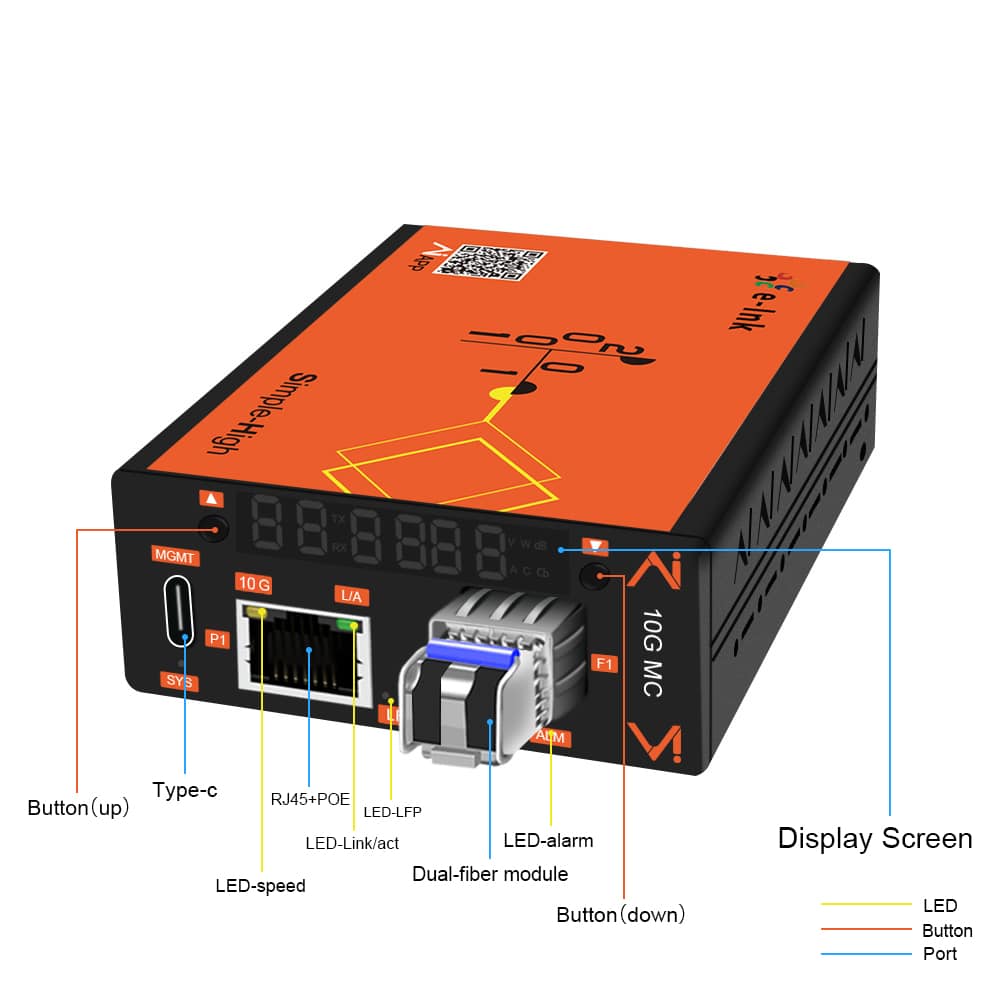
LNK-AI10GM-SFP AI smart managed 10G multi-gig media converter detail view

4. Technical Comparison Table


Feature Traditional Media Converter AI Smart Managed Media Converter
Device Type Unmanaged Intelligent managed device
Monitoring None Real-time DDM & system status
Remote Access Not supported Web & mobile app management
Optical Diagnostics Not available Full TX/RX power & temperature monitoring
Fault Detection Manual Automatic alarm system
Maintenance On-site only Remote & scheduled control
Reboot Control Power cycle Scheduled & remote reboot
Network Visibility None Full dashboard visibility

5. Engineering Benefits (Why It Matters)

5.1 Real-Time Fiber Visibility (DDM)

Operators can monitor:

  • Optical TX power
  • Optical RX power
  • Module temperature
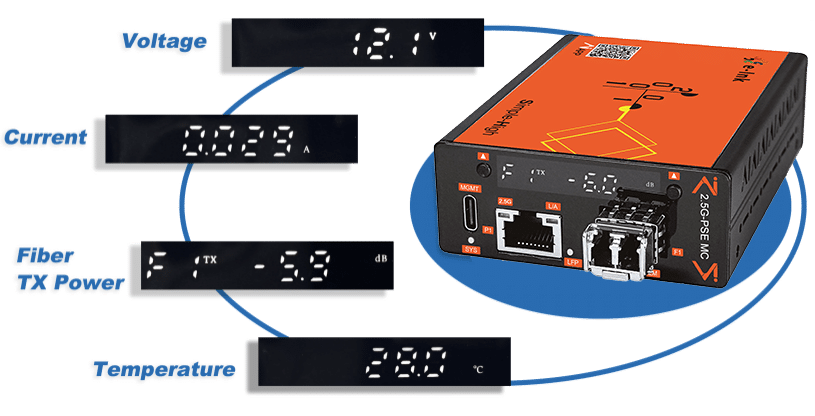
  • Voltage & current

This enables predictive maintenance instead of reactive repair, especially in high-performance fiber networks.


5.2 Remote Network Operation

Through Web or Mobile APP, engineers can:

  • Monitor fiber nodes remotely
  • Adjust configuration settings
  • Detect abnormal optical levels
  • Restart devices without site visits

This is critical for large-scale fiber optic data transmission systems.


5.3 Reduced Maintenance Cost

By eliminating manual inspection and external test tools:

  • Fewer site visits
  • Lower OPEX
  • Faster troubleshooting
  • Higher network uptime
System monitoring dashboard showing voltage, current, and temperature on AI smart managed PoE media converter
AI smart managed media converter App and Web dashboard showing real-time monitoring

6. Application Scenarios

AI Smart Media Converters are designed for modern network infrastructures:

  • Smart city fiber networks
  • IP surveillance systems
  • Industrial automation networks
  • Telecom backbone & access networks
  • Data center interconnect (DCI)
  • Remote monitoring systems

They are especially effective in long distance fiber transmission and high-speed ethernet networks.

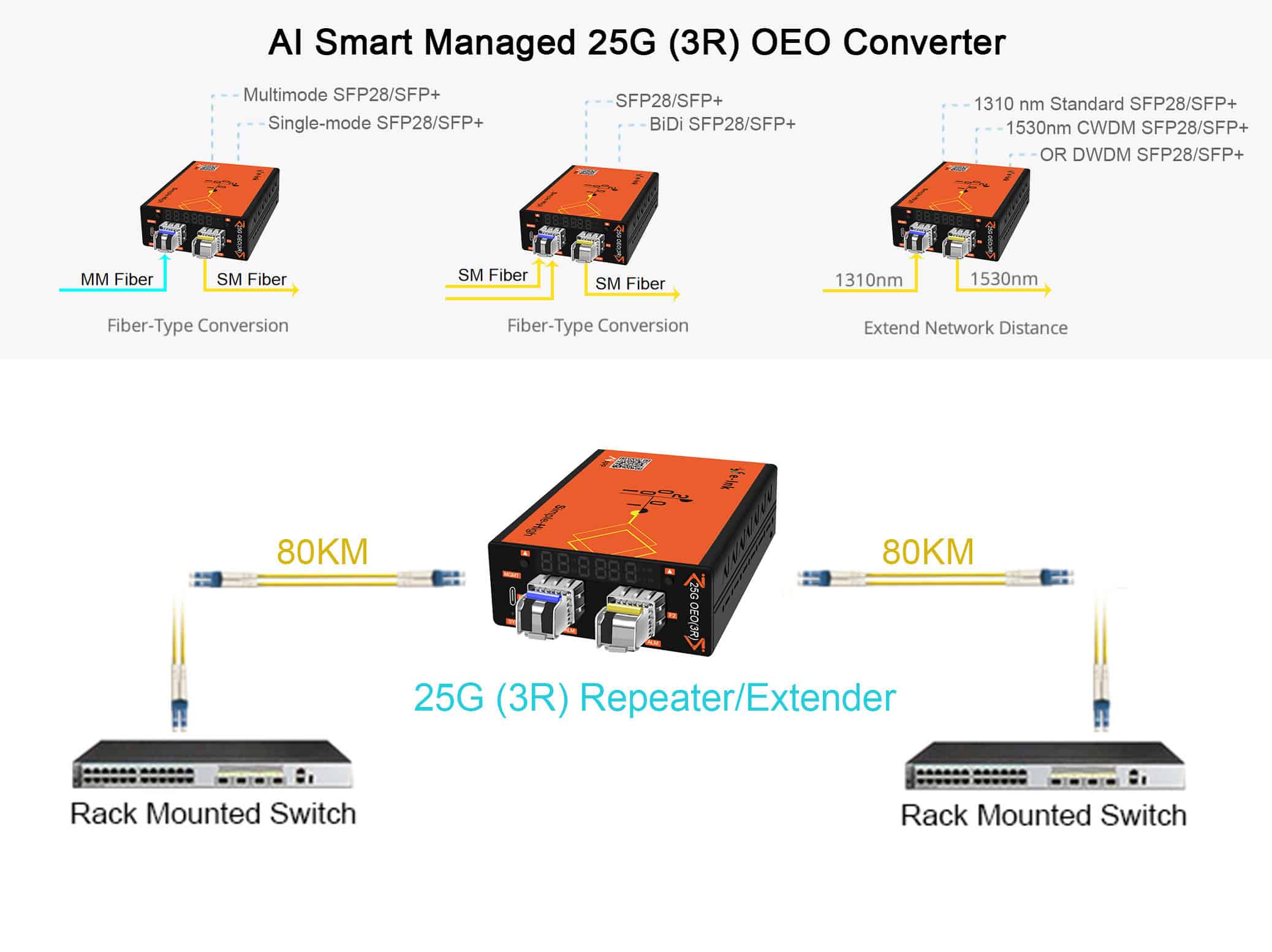
25G OEO converter used in data center interconnect and SAN network deployment

7. Recommended E-link AI Smart Products

8. Upgrade Your Network to Smart Management

Traditional media converters only provide connectivity.

AI Smart Managed Media Converters provide:

  • Connectivity
  • Visibility
  • Intelligence

This transition enables:

  • Predictive maintenance
  • Remote network control
  • Lower operational cost
  • Higher system reliability

Ready to Upgrade Your Network?

If you are planning a new deployment or upgrading an existing fiber network, our engineering team can help you select the right model.

Contact Sales

Leave a Comment

Your email address will not be published. Required fields are marked *