

Can you connect a 24V PoE device to a 48V PoE switch?
No. A 24V passive PoE device should not be directly connected to a 48V IEEE 802.3af/at PoE switch. The voltage mismatch can damage the device. A PoE splitter (48V to 24V) is required for safe operation.
1. What Is the Difference Between 24V and 48V PoE?
Understanding the difference is essential before making any connection.
24V Passive PoE
- Fixed voltage output (24V)
- No negotiation protocol
- Power is always on
48V Standard PoE (IEEE 802.3af/at)
- Intelligent power delivery
- Device detection before power supply
- Higher voltage (typically 44–57V)
Key Takeaway
The difference is not only voltage, but also how power is delivered and controlled.
2. Why 24V PoE Devices Are Not Compatible with 48V PoE Switches
Direct connection creates a mismatch in both voltage and communication.
Risks of Direct Connection
- Overvoltage damage
- Circuit failure
- Device overheating
- Permanent hardware damage
👉 A 48V PoE switch may supply power beyond what a 24V device can handle.

3. Safe Ways to Connect 24V PoE Devices to a 48V PoE Switch
✅ Solution 1: Use a PoE Splitter (Best Practice)
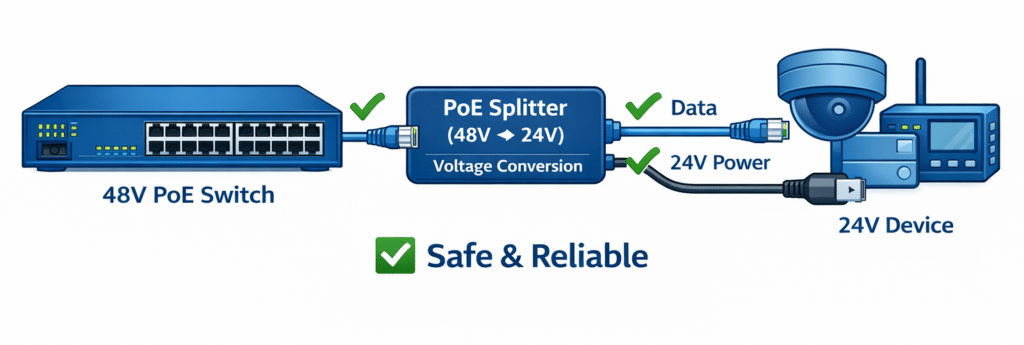
A PoE splitter converts standard PoE into usable power for legacy devices.
How It Works
48V PoE Switch → PoE Splitter → 24V Device
Outputs:
- Ethernet data
- Regulated 24V power
Why It Works
- Steps down voltage safely
- Isolates power delivery
- Prevents overload
video: How to Power 24V Devices with a 48V PoE Switch
✅ Solution 2: Use a 24V Passive PoE Injector
Used when your device requires power over Ethernet (not separate DC input).
Setup
Non-PoE Switch → Injector → Device
When to Use
- Small deployments
- No need for centralized PoE control
Limitation
- Cannot utilize PoE switch power management

✅ Solution 3: Upgrade to IEEE Standard PoE Devices
For long-term scalability, upgrading is recommended.
Benefits
- Full compatibility
- Safer deployment
- Easier maintenance
4. Recommended Network Design (Best Practice)
For mixed PoE environments:
Architecture:
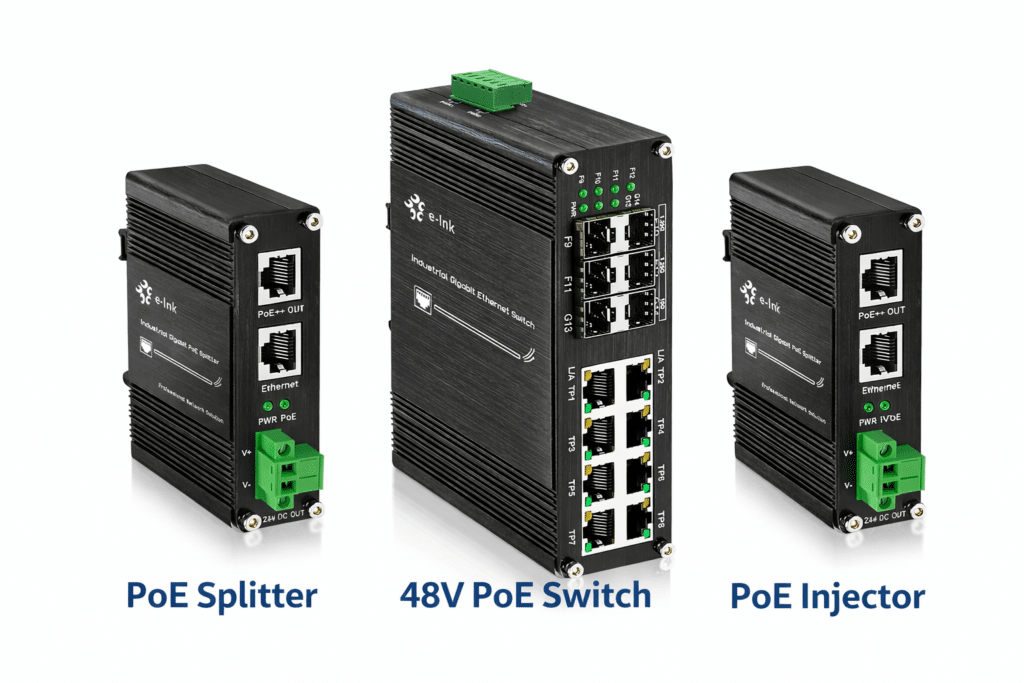
- 48V PoE switch as central power source
- PoE splitter for each 24V device
Advantages
- Centralized power management
- High flexibility
- Reduced failure risk
5. Real-World Use Case
A system integrator needed to connect 24V wireless bridges to an industrial PoE switch.
Deployment Result
- Direct connection → Failed
- With PoE splitter → Stable operation
👉 After deployment, the system ran continuously without voltage-related issues.
6. Installation Checklist
Before connecting devices, always verify:
- Device input voltage
- Power consumption (W)
- PoE standard compatibility
Important Rules
- Never connect 24V directly to 48V PoE
- Always use a voltage converter (splitter)
- Use industrial-grade components for outdoor/harsh environments
7. Conclusion
24V passive PoE and 48V standard PoE are fundamentally different systems.
To ensure safe and reliable deployment:
- Use a PoE splitter for voltage conversion
- Avoid direct connection
- Upgrade to standard PoE devices when possible
Common Questions About 24V and 48V PoE
No. This may damage the device due to higher voltage output.
Using a PoE splitter (48V to 24V) is the safest and most common solution.
No. Standard PoE switches detect compatible devices, but they do not convert voltage for non-standard devices.
It can cause overheating, circuit damage, or permanent failure.
No. Passive PoE always outputs power, while standard PoE uses negotiation protocols.